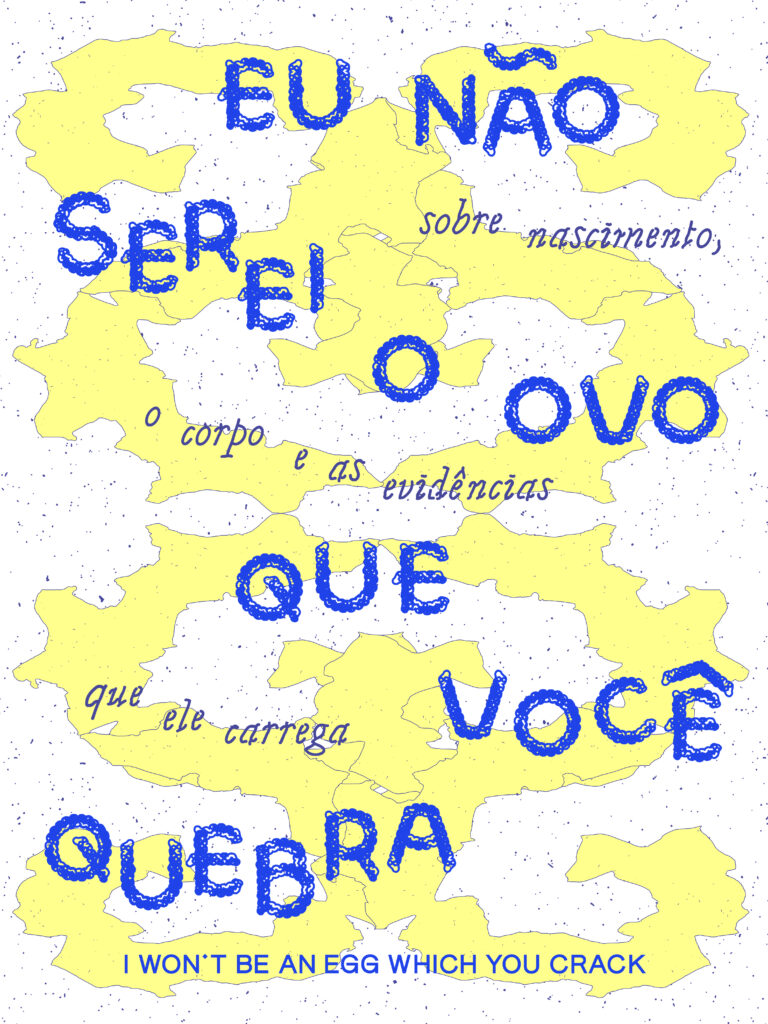
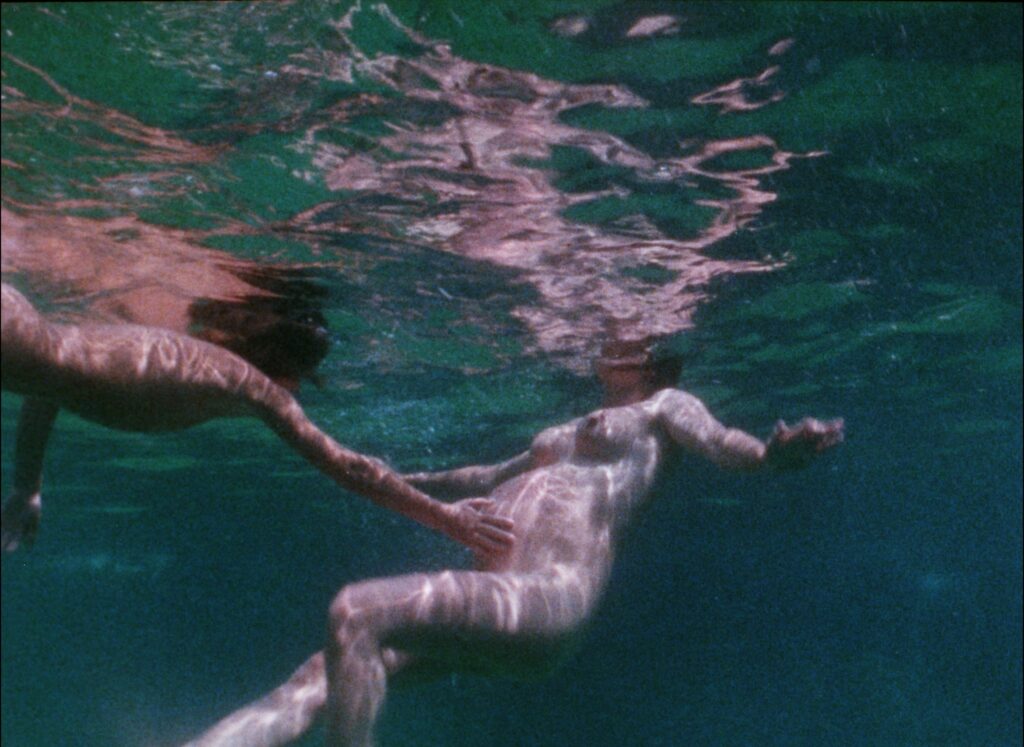
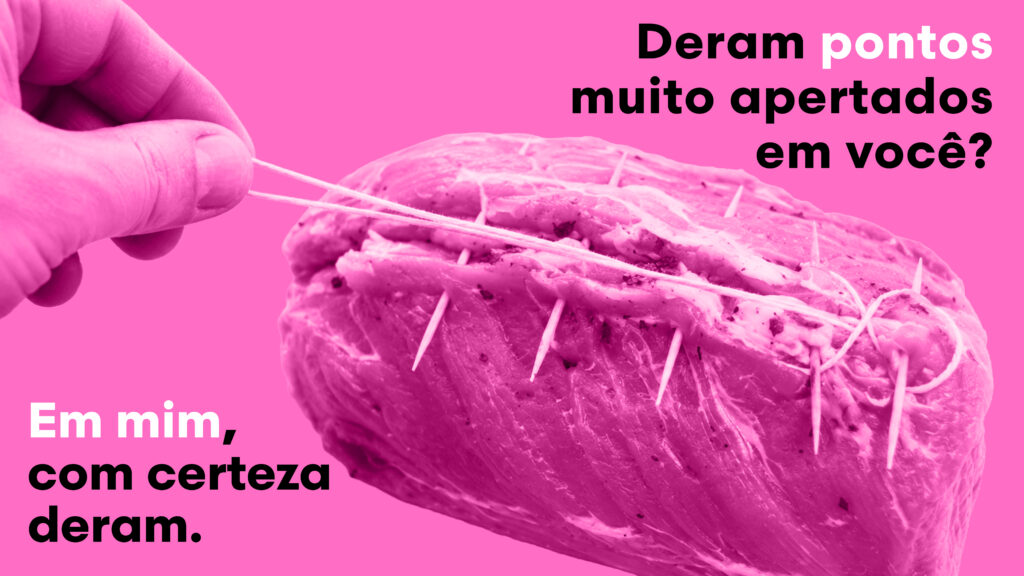
I won’t be an egg which you crack: On birth, body and the evidence it carries
Public Art Commissions
1 - 26 September 2026
Rio de Janeiro, Brazil
Não serei o ovo que você quebra:
Sobre nascimento, o corpo e as evidências que ele carrega
“You are not going to defeat me,” I say
“I won’t be an egg which you would crack
in a hurry for the world,
a footbridge that you would take on the way to your life.
I will defend myself.”
—Anna Świrszczyńska, “Talking to My Body,” as quoted in Iman Mersal, [On Motherhood and violence], Makhzin.
Mothers make the world.
In their scream both loud and silent, they sustain what is often framed as the foundation of humanity: birth. The ultimate act of creation, it is equally one of vital destruction; intimate, irreversible and world-altering. Birth tears the body open to let the world in, yet the cracks of this fracture extend far beyond this foundational moment.The mother keeps carrying long after birth. Like land, the birthing body is a site where power is imposed, resisted and remembered: the ideologies that press themselves into flesh, the dispossession that inscribes itself into land and lineage, the grief held quietly so that life can continue. The mother is the custodian from which this project unfolds; the embodied evidence through which broader, systemic struggles become legible.
In Yorùbá culture, African women choose to be called mother without necessarily birthing as the role is considered the truest practice of leadership, an impetus to building and holding community. Nigerian sociologist and gender scholar Oyèrónkẹ́ Oyěwùmí names this matripotency—the profound material and spiritual authority that flows from the act of bringing forth and sustaining life. To reckon with birth is to reckon with everything, and if we want to transform the world, we must begin by transforming how we hold the people who bring it into being.
Building on TAP’s ongoing research on breath as both a biological necessity and a political condition, the program echoes the four-count deep inhale of active labour by unfolding over four weekends in September, through an exhibition, film screenings, workshops, interventions in public space across multiple venues and cultural institutions in Rio de Janeiro, and will be accompanied by a publication.
I won’t be an egg which you crack: On birth, body, and the evidence it carries is an interdisciplinary program curated by TAP (Temporary Art Platform) under the artistic direction of Amanda Abi Khalil in partnership with Instituto Comadre, as part of Evidence, an international festival by the Center for Human Rights and the Arts (CHRA) at Bard, in association with the Fisher Center LAB.
Locations:
Casa Comadre, Capacete, Cinemateca do MAM, Museum of Modern Art Rio (MAM), Solar dos Abacaxis, various public spaces and billboards across the city.
Artists and participants
Adriana Varejão, Amanda Devulsky, Ana Mendieta, Ana Paula Oliveira, Anna Costa e Silva, Ashkan Cheheltan, Bruna Silva, Casa das Mulheres da Maré, Celeida Tostes, Claudia Casarino, Colectivo Textileras MSSA, Darks Miranda, Dora Selva, Escola Viva Baniwa, Fernanda do Vale Santos, Flávia Palladino, Franziska Pierwoss, Jacklline Oliveira, Jarbas Lopes, Joana Hadjithomas and Khalil Joreige, Júlio Araújo Junior, Laura Lima, Lidia Lisboa, Mães de Manguinhos, Maiara Oliveira, Marcela Cardoso, Maria Antônia, Maria Magdalena Campos-Pons, Maiara Oliveira, Mariana Pimentel, Mona Hatoum, Mônica Ventura, Patrícia Mothé Glioche Béze, Rami Nihawi, Redes da Maré, Tamar Ettun, Thaís Desana, Tracey Emin, and Yann Le Masson.
Curatorial interlocutors
Maìra Marques and Gabriela Davies (Instituto Comadre), Marilanda Lima (urban midwife), Danielle Makhoul (associate curator)
Institutional Support
Alterlabs, Capacete, Cinemateca do MAM, Cometa Impressos, Consulat général de France à Rio de Janeiro, Goethe-Institut, Instituto da Cultura Árabe (Icarabe), Juntes na Cultura, MAM Rio, Solar dos Abacaxis.